

Granollers focuses on transforming the new urban developments in the city into low-carbon neighbourhoods through co-designed planning guidelines. The initiative integrates green and grey infrastructure, resilient urban design, and inclusive strategies to adapt to floodings and high temperatures while creating/searching opportunities for everyone.
The UP2030 Granollers pilot concentrates on the new neighbourhood to be developed near the Rail Station, shaping it as a climate-neutral, resilient, and socially inclusive urban area. Insights from this prototype are now being scaled citywide through the creation of the Urban Climate Planning Guide. This guide provides technical criteria, design strategies, and governance recommendations to ensure that future urban growth aligns with Granollers’ 2030 vision: a healthy, sustainable city that places people and equity at the centre. It responds to key vulnerabilities such as heatwaves and pluvial flooding, while promoting decarbonization, green mobility, and accessible public spaces.
Developed through a co-creation process involving over 100 stakeholders from municipal departments, academia, and civil society, the project combines local insight with advanced analytical tools. Using RESCCUE (to assess cost-effective climate adaptation) and City Scan (to model spatial and environmental scenarios), Granollers produced actionable, data-informed guidelines for sustainable and inclusive neighbourhood planning. These tools helped evaluate co-benefits, efficiency, and spatial justice indicators, ensuring the resulting guidelines are evidence-based and adaptable.



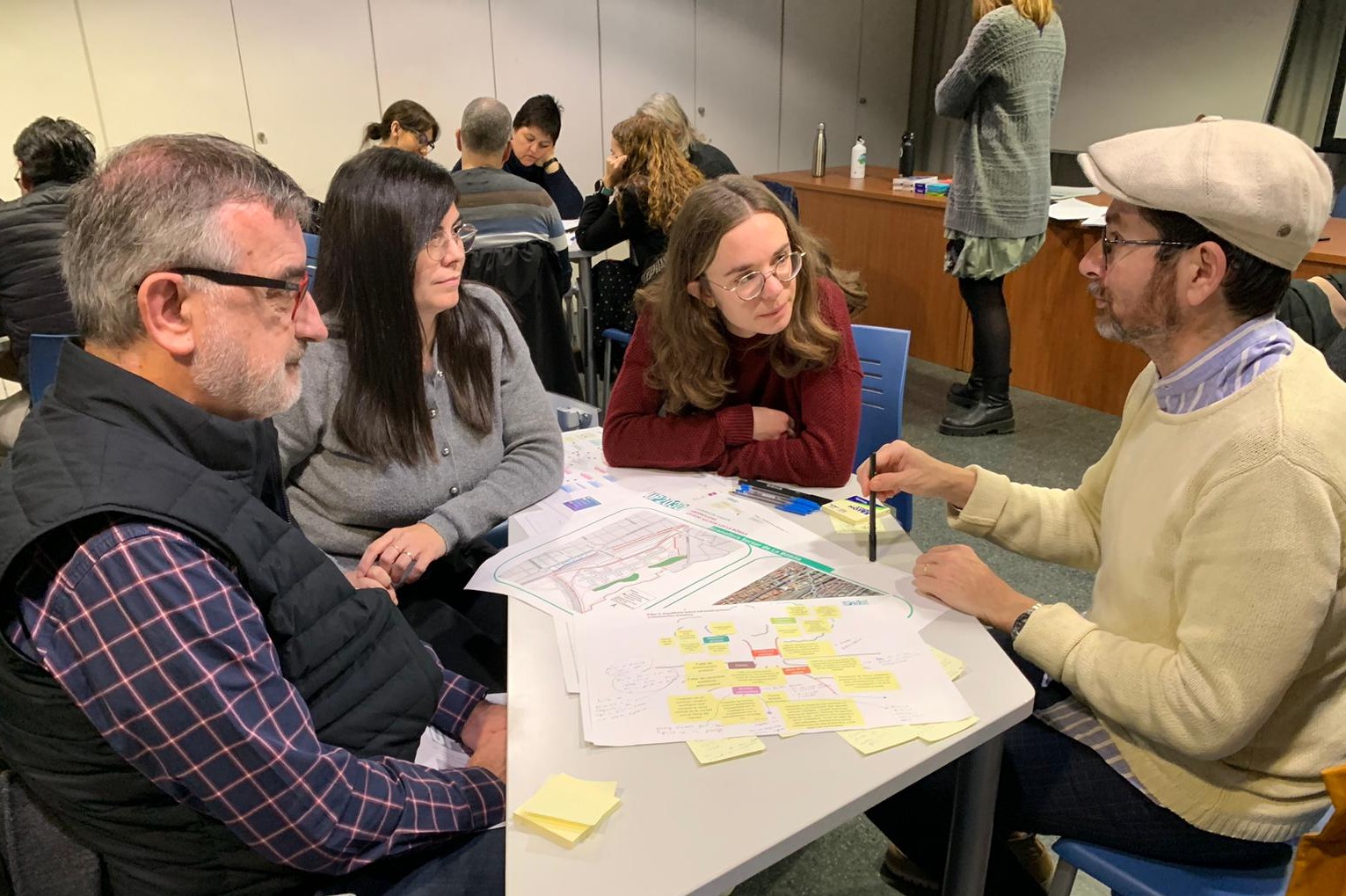
City decision-makers and planners, urban designers, and city council municipal areas in charge of the urban services/facilities of the city.
Impact and Long Term Vision
Granollers’ Urban Climate Planning Guide transforms the lessons of the pilot into a replicable framework for future neighbourhoods. By merging technical expertise with community collaboration, the city has developed a structured, scalable methodology for achieving climate neutrality, resilience, and spatial justice. As a living prototype, the guide will function as a stylebook for future city transformation processes, ensuring that new developments embed climate resilience and inclusion from the outset. Through this integrated and participatory approach, Granollers is leading by example - turning climate adaptation and urban equity into core principles of city planning.
- Aquatec
- Icatalist (ICA)
- TSPA
- Vrije Universiteit Brussel (VUB)
- Centre for Research & Technology Hellas (CERTH)
- URLAB
Leading the application of RESCCUE for assessing and prioritising flood adaptation strategies.
Providing and guiding the LAA methodology applied in the co-creation process.
Developing and applying the City Scan tool to evaluate and compare low-carbon urban design scenarios.

Supporting engagement through Neutrality Story Maps (NSMs).

Supporting engagement through Neutrality Story Maps (NSMs).
Providing expertise in resilience-oriented planning content.


Funded by the European Union. Views and opinions expressed are however those of the author(s) only and do not necessarily reflect those of the European Union or the European Climate, Infrastructure and Environment Executive Agency (CINEA). Neither the European Union nor the granting authority can be held responsible for them. This project has received funding from the Horizon Innovation Actions under the grant agreement n° 101096405.