

The City of Muenster advances its climate neutrality ambitions through an integrated, district-level approach that connects climate mitigation, adaptation, and participation in neighborhood development.
Developed by the Climate Office of Münster in collaboration with Buro Happold and under the UP2030 framework, the Guideline for Climate-Friendly Neighborhoods provides a methodological framework for embedding climate action into everyday urban planning. Built around the Climate Proofing Method, it translates Münster’s 30-year experience in climate policy into a process-oriented guide for practitioners. The guideline consolidates knowledge, data, and implementation tools while promoting cross-departmental collaboration and citizen participation. It focuses on achieving climate justice by ensuring that ecological and social priorities are addressed together and that all residents benefit equally from the transition to climate-neutral and climate-resilient neighborhoods.


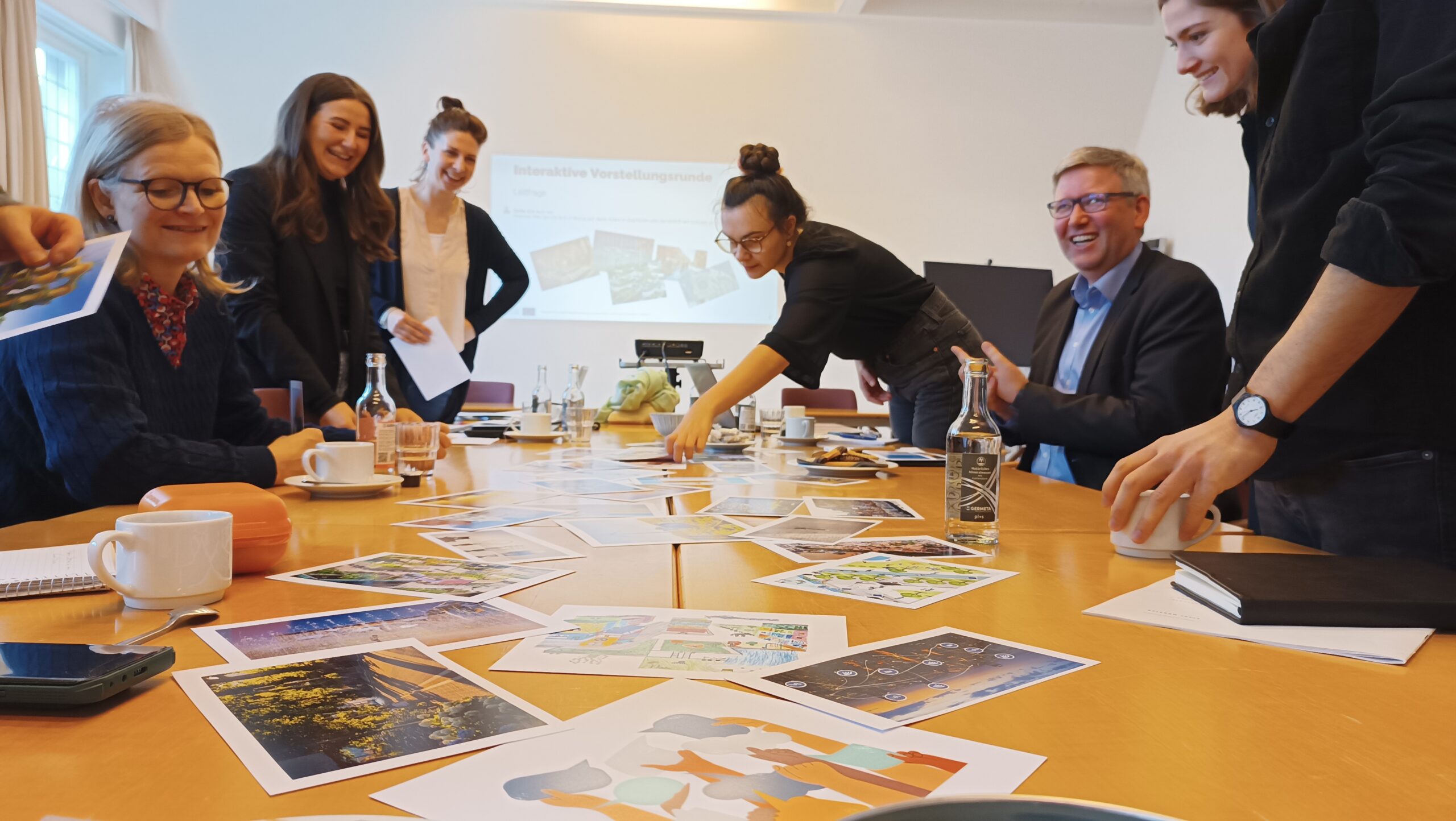
Municipal planners, technical departments, architects, residents, and community organizations working to integrate climate mitigation, adaptation, and social participation in neighborhood development.
.
Impact and Long Term Vision
The Guideline for Climate-Friendly Neighborhoods extends Münster’s climate action from single buildings to the neighborhood scale, embedding sustainability into local governance. By institutionalizing the climate proofing process, the city ensures that mitigation and adaptation measures are applied holistically and equitably. The guideline contributes to Münster’s goal of climate neutrality by 2030, serving as a practical and replicable model for other European cities pursuing integrated, climate-just, and participatory urban transitions.

Tailoring the Climate Proofing Method to a holistic Guideline for integrated mitigation and adaptation actions in Muenster by using existing concepts, strategies, and data already in place in Münster.

Supporting visual storytelling through Neutrality Story Maps.
Supporting visual storytelling through Neutrality Story Maps.

Funded by the European Union. Views and opinions expressed are however those of the author(s) only and do not necessarily reflect those of the European Union or the European Climate, Infrastructure and Environment Executive Agency (CINEA). Neither the European Union nor the granting authority can be held responsible for them. This project has received funding from the Horizon Innovation Actions under the grant agreement n° 101096405.